
Style Focus: Lagers
In this Style Focus, we look at the technical foundations of brewing lagers with precision and consistency. This category spans a wide range of expressions, from highly attenuated international pale lagers to malt-forward Helles, What unites them is not flavour, but process: clean fermentation, tight control of sulfur and diacetyl, good clarity, and a polished finish.
Lagers are often less forgiving than hop-saturated ales, there is nowhere for process faults to hide. Poor wort separation, weak boil performance, under-pitching, insufficient maturation, or oxygen pickup will all show clearly in the finished beer.
The goal is not simply to make a “clean beer,” but to produce a beer where malt, bitterness, carbonation, sulfur expression, and attenuation are all deliberate and balanced. That makes lager brewing less about any single ingredient and more about the correct use of brewing tools at each stage. That means thinking beyond yeast alone and building the style around the full process: enzymes for fermentability and brewhouse performance, nutrients for healthy fermentation, tannins and process aids for wort clarification and stability, and antioxidants for flavour preservation.
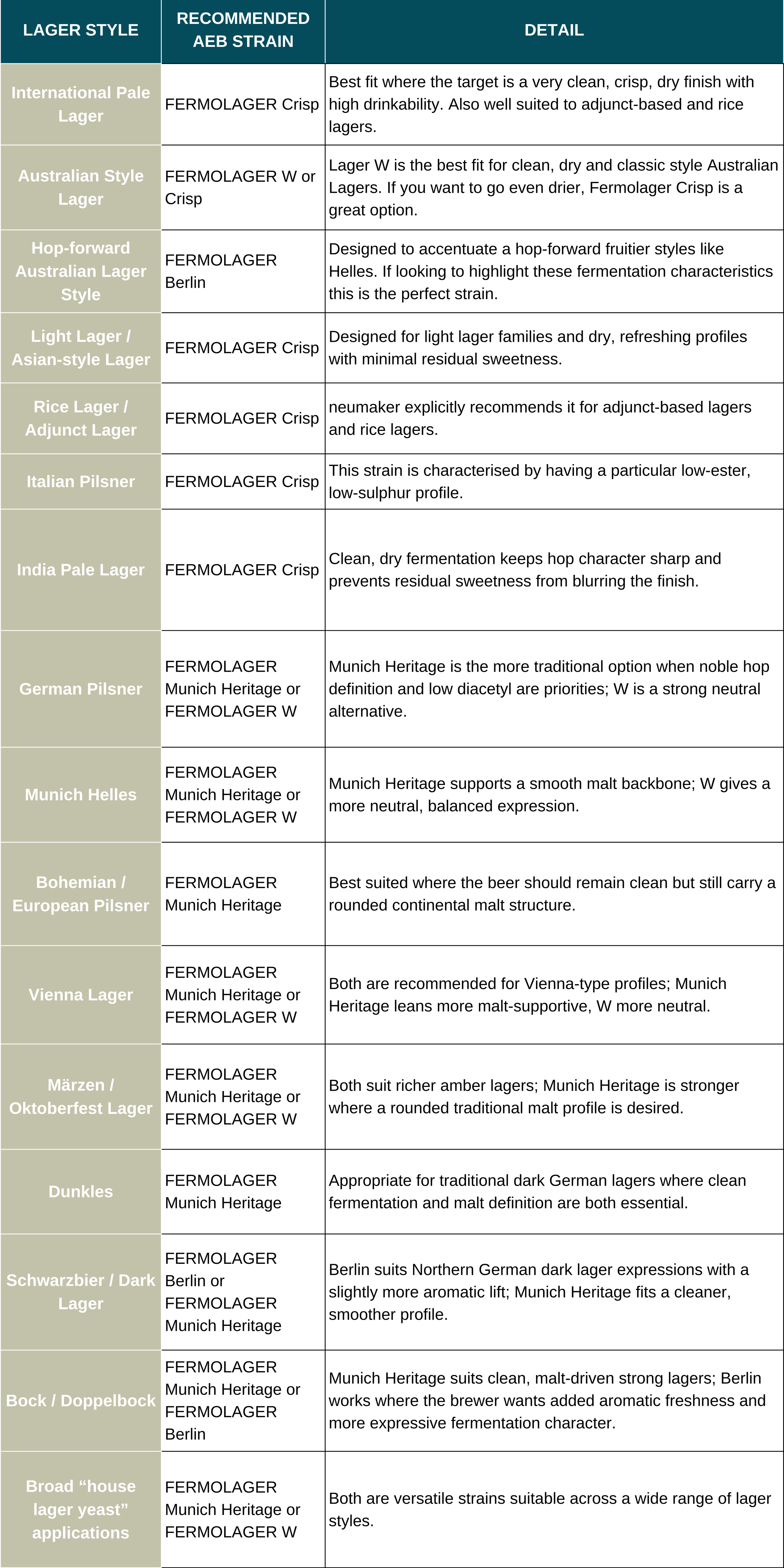
Yeast Selection and Fermentation Profile
Yeast selection is one of the most important choices in lager production because it determines not only fermentation performance, but also how dryness, sulfur expression, ester intensity, malt accentuation, and hop definition present in the finished beer.
Below are strain recommendations by beer style.
Grist Design and driving fermentability
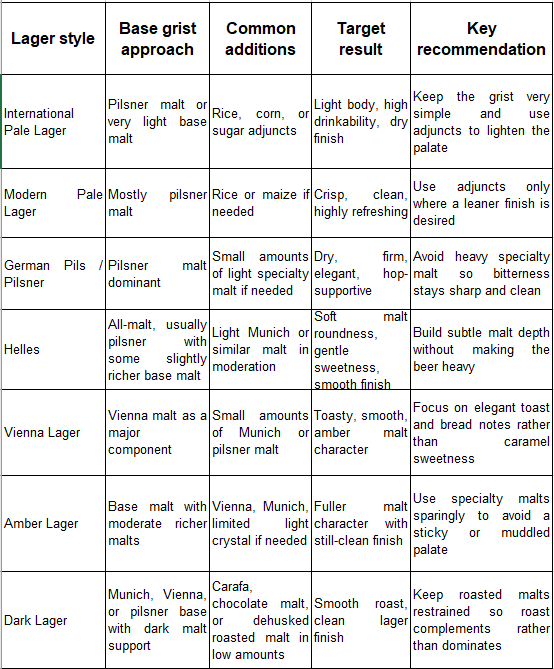
Because lagers rely on balance, clarity, and drinkability rather than heavy flavour layering, the grist should be built to support fermentability, foam stability, and the intended style outcome. In most cases, simplicity is an advantage. The base malt provides the foundation, while adjuncts or specialty malts should only be used where they clearly help achieve the desired body, finish, or flavour profile.
If additional body is needed, it is usually better to achieve it through mash profile, attenuation control, or carbonation balance rather than by relying on sweetness-driven malts. A well-designed lager grist should make the beer feel precise and drinkable .
ENDOZYM® AMG is positioned as the glucoamylase of choice when brewing light or low-calorie beers, breaking down starch and dextrins into glucose during mashing. For more aggressive attenuation targets, ENDOZYM® AGP 120 is designed to maximise starch conversion into fermentable sugars and is recommended for highly attenuated beers with a dry, crisp finish. ENDOZYM® Brewmix Plus supports fermentability and filtration through a combined β-glucanase, α-amylase, and protease action, while ENDOZYM® Glucacel UHT is particularly useful where β-glucan load, adjunct use, or high-viscosity worts threaten lautering and filtration performance. For breweries pushing adjunct levels or brewhouse efficiency, ENDOZYM® Alphamyl SB1 can also be used during mashing to accelerate starch hydrolysis and improve extract yield.
Grist Recommendations by Lager Style
Wort Clarification and Hot-Side Stability
In lagers, poor wort clarity and unstable hot-side handling are rarely hidden in the final beer. Excess trub, oxidisable polyphenols, and poor break separation can all show up later as haze, rough bitterness, shorter shelf life, or less precise fermentation. For that reason, clarification and stabilisation tools deserve a more deliberate place in lager production.
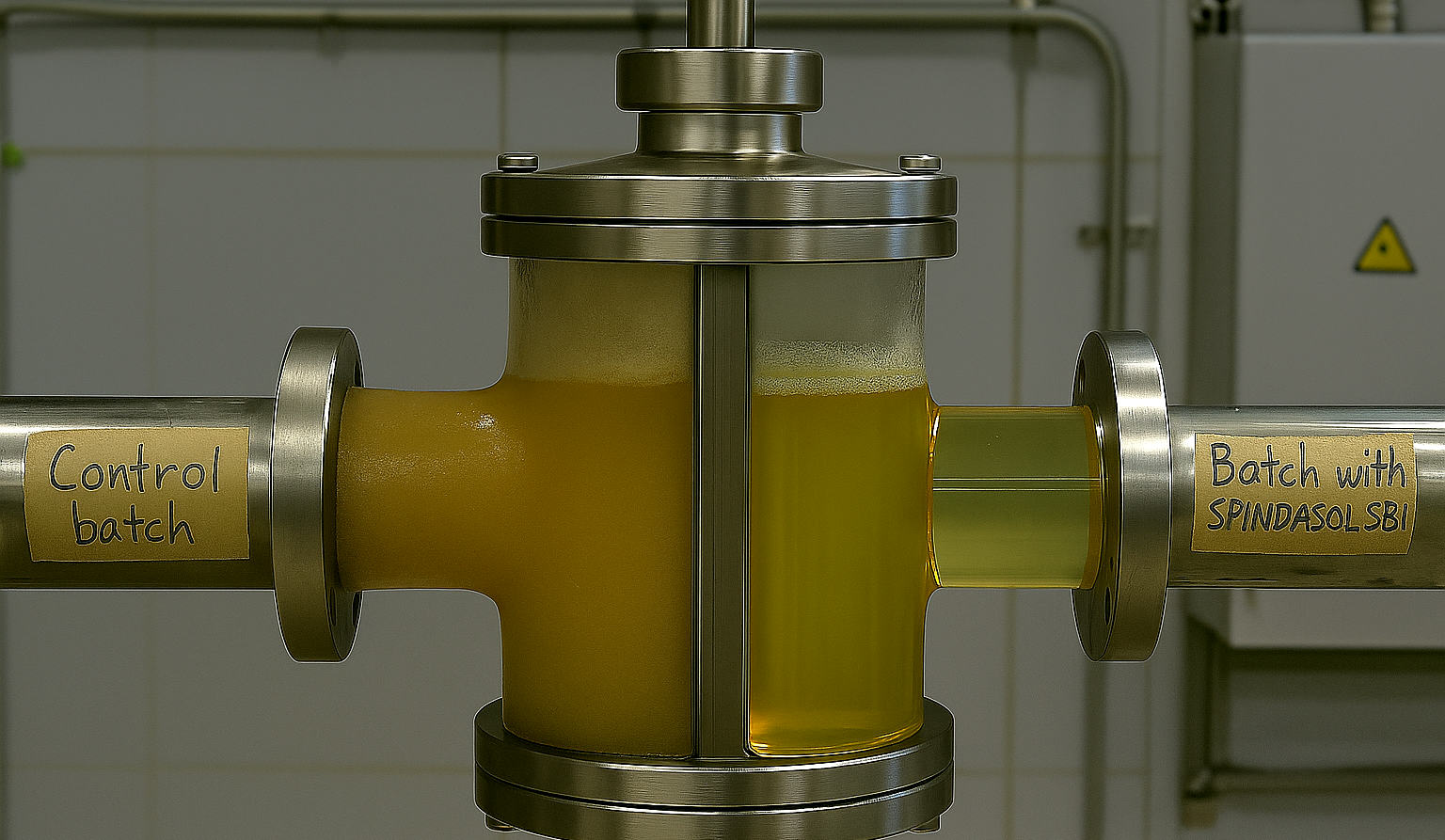
Neumaker offers several products that fit this stage discreetly but effectively. SPINDASOL® SB1 is a colloidal silica sol designed specifically for wort clarification, improving sedimentation of coarse break material and reducing trub carry-over into fermentation. SPINDASOL® SB1 is added in the final minutes of wort boiling or inline between kettle and whirlpool, and positions it as a way to obtain clearer wort, cleaner fermentation conditions, and improved filtration efficiency. Click here to learn more about Spindasol SB1
POLYGEL BH sits slightly differently in the process. It is presented as a wort stabiliser that acts on both polyphenols and proteins, improving whirlpool efficiency, compaction of trub, filterability, and overall beer stability. Using POLYGEL BH will provide easier stabilisation, extended shelf life, and preservation of colour, aroma, and taste. That makes it particularly relevant in lager styles where brightness and flavour precision are part of the sensory expectation
For brewers who want an additional hot-side stabilisation lever, GALLOBREW is a gallic tannin solution. Added during mashing and is positioned as a tool for wort clarification and stabilisation through its interaction with proteins, enzymes, and oxidative catalysts. GALLOBREW is designed not to contribute bitterness or astringency, which is especially important in lager styles. Click here to learn more about GALLOBREW
Fermentation Support and Nutrient Strategy
FERMOPLUS® PerfectBrew-Zn, is a zinc-rich nutrient blend containing biologically sourced zinc, DAP, and thiamine, designed to enhance yeast propagation, improve sugar assimilation, and reduce the risk of stalled fermentations, including in adjunct-heavy brewing. In a lager context, that makes it a useful support tool where brewers are working with high adjunct levels, high gravity, marginal yeast health, or any fermentation conditions where reliable completion is critical
Click here to learn more about FERMOPLUS® PerfectBrew-Zn
Long term freshness protection: preventing oxidation.
ANTIOXIN® SBT lowers aging compounds and improves oxidative stability, with related guidance noting that its use can help preserve organoleptic freshness and, in some contexts, reduce dissolved oxygen and maintain a paler wort colour. In a lager production context this is highly important as this particular style is more prone to perception of oxidation by the consumer. Click here to learn more about ANTIOXIN® SBT

Ana Victoria Vasquez de la Peña
ana@neumaker.com.au

10th October 2025
© 2025 neumaker. All rights reserved. This article may be shared/forwarded for personal or educational purposes, provided it remains unaltered and includes proper attribution. Reproduction, distribution, or use in any other form—including but not limited to commercial purposes, republishing, or adaptation—without explicit written permission is strictly prohibited.