

FERMOALE Bel Abbey: Building Classic Belgian Character Through Yeast Selection
Belgian-style ales are defined as much by fermentation character as they are by malt bill, gravity, or hopping rate. In styles such as blonde, dubbel, tripel, quadrupel, Belgian pale ale and strong ale, yeast is not simply a fermentation tool, it is one of the primary drivers of aroma, flavour, mouthfeel and overall style expression.
FERMOALE Bel Abbey draws on the heritage of classic Belgian brewing, with the strain originally isolated from Brasserie de Rochefort, one of Belgium’s most renowned Trappist breweries. This connection gives the yeast strong relevance for Abbey and Trappist-inspired ales, where brewers are seeking layered ester development, reliable attenuation and the ability to manage stronger wort fermentations without losing balance or drinkability.
Compared with some other Belgian ale strains, FERMOALE Bel Abbey is generally less phenolic, allowing its fruity, fermentation-derived complexity to come forward without becoming overly spicy or sharp. The result is a yeast option that supports expressive Belgian character while maintaining structure, softness and drinkability across a range of classic Belgian-inspired beer styles.
Yeast as the Signature of Belgian Ale
Unlike many clean-fermenting beer styles, Belgian ales often rely on yeast-derived complexity as a core feature of the finished beer. While malt provides the base structure and hops contribute bitterness and aromatic lift, the fermentation profile can determine whether the beer presents as simple and sweet, or layered and expressive.
In Belgian Abbey-style brewing, the desired profile often includes:
dried fruit notes such as raisin, date and fig
soft spice or pepper-like phenolic complexity
moderate to high attenuation for drinkability
alcohol warmth without harshness
enough malt sweetness to support the yeast character
a clean enough finish to avoid heaviness in stronger beers
FERMOALE Bel Abbey is designed for this style space, delivering rich dried fruit ester notes, including raisin, date and fig, alongside light peppery phenolic notes and a subtle caramel impression. This makes it well suited to malt-forward Belgian ales where complexity needs to come from fermentation rather than excessive ingredient additions.
Fermentation Performance and Attenuation
A key consideration in Abbey and strong Belgian-style beers is attenuation. These beers often begin with higher original gravities, yet the final beer still needs to remain drinkable. Excessive residual sweetness can make dubbels and quadrupels feel heavy, while tripels and strong golden ales can become unbalanced if the yeast does not ferment efficiently.
FERMOALE Bel Abbey offers high apparent attenuation of 75–85%, helping bManaging Temperature for Flavour Expression
Brewers achieve a drier, more digestible finish while still preserving the malt and fermentation complexity expected in the style. This attenuation range is particularly useful in stronger Belgian ales, where fermentability and yeast health play an important role in avoiding cloying sweetness.
For brewers developing higher-gravity Belgian beers, recipe design should support this attenuation target. Highly fermentable wort, appropriate oxygen management, and sufficient yeast nutrition are all important. In strong beers, yeast stress can quickly lead to sluggish fermentation, elevated alcohol harshness, or incomplete attenuation.
Managing Temperature for Flavour Expression
FERMOALE Bel Abbey has a recommended fermentation temperature range of 16–25°C. This gives brewers flexibility to shape the flavour profile depending on the desired beer style.
At the lower end of the range, fermentation character may be more restrained, which can be useful for Belgian pale ales or blonde ales where balance and drinkability are priorities. At the warmer end, ester expression may become more pronounced, supporting richer fruit character in dubbels, tripels and strong dark ales.
However, temperature control remains important. Belgian yeast character should be expressive, not uncontrolled. Rapid temperature fluctuations can stress yeast and affect fermentation performance. Brewers should minimise temperature fluctuations to avoid yeast stress
A practical approach is to begin fermentation in the lower-to-mid part of the recommended range, then allow a controlled rise as fermentation becomes active. This can support a complete fermentation while encouraging appropriate ester development.
Alcohol Tolerance for Strong Belgian Styles
Many Belgian Abbey-style beers sit above standard session-strength alcohol levels. Tripels, quadrupels and strong ales require a yeast strain that can continue performing under elevated alcohol pressure.
FERMOALE Bel Abbey has an alcohol tolerance of up to 12% ABV, making it suitable for stronger Belgian-style applications. This is particularly relevant for brewers producing high-gravity beers where yeast resilience is essential for achieving the intended final gravity and flavour profile.
In high-alcohol fermentations, it is good practice to consider:
pitching at the appropriate rate
ensuring sufficient yeast nutrition
managing wort oxygenation appropriately
avoiding excessive temperature swings
allowing sufficient conditioning time
High gravity, high adjunct, or high acidity fermentations may require higher pitching rates and the addition of yeast nutrients. For commercial brewers, this is especially important when scaling Belgian-style beers from pilot trials to production volumes.
Practical Brewing Applications
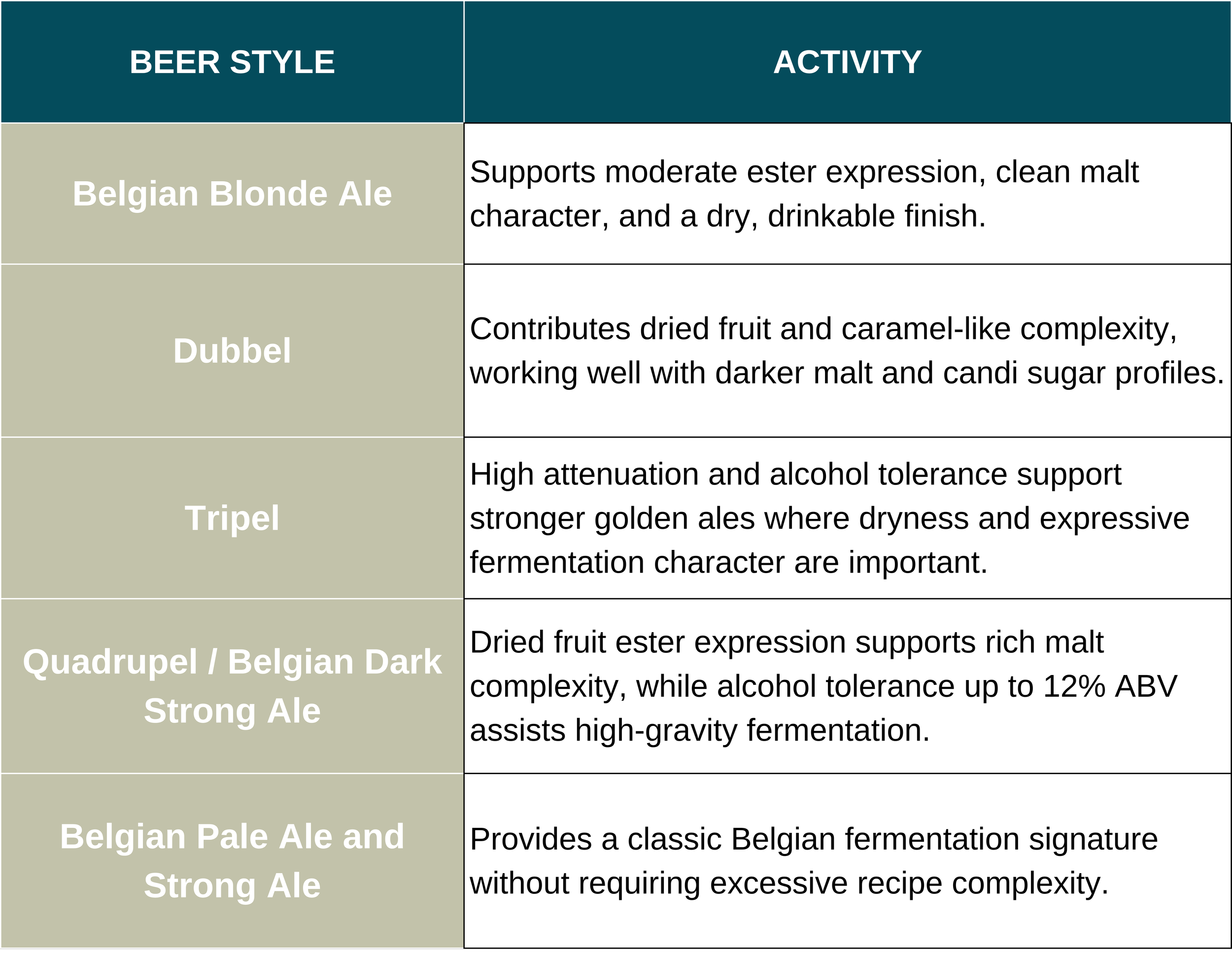
In Belgian-style brewing, yeast selection is central to the identity of the beer. FERMOALE Bel Abbey offers brewers a practical and expressive dry yeast option for Abbey and Trappist-inspired ales, combining high attenuation, medium flocculation, strong alcohol tolerance and a flavour profile built around dried fruit esters, light peppery phenolics and subtle caramel complexity.
For breweries looking to produce Belgian blonde, dubbel, tripel, quadrupel, pale ale or strong ale styles, FERMOALE Bel Abbey provides a reliable fermentation platform that supports both style authenticity and production consistency. Its recommended direct-pitch application, broad fermentation temperature range and suitability for stronger beers make it a flexible choice for brewers seeking classic Belgian fermentation character with modern process control.

Ana Victoria Vasquez de la Peña
ana@neumaker.com.au

10th October 2025
© 2025 neumaker. All rights reserved. This article may be shared/forwarded for personal or educational purposes, provided it remains unaltered and includes proper attribution. Reproduction, distribution, or use in any other form—including but not limited to commercial purposes, republishing, or adaptation—without explicit written permission is strictly prohibited.